
Stock
400bhp
Factory output
+0 bhp
Vehicle Remap
High-output five-cylinder platform needing careful heat and gearbox management.
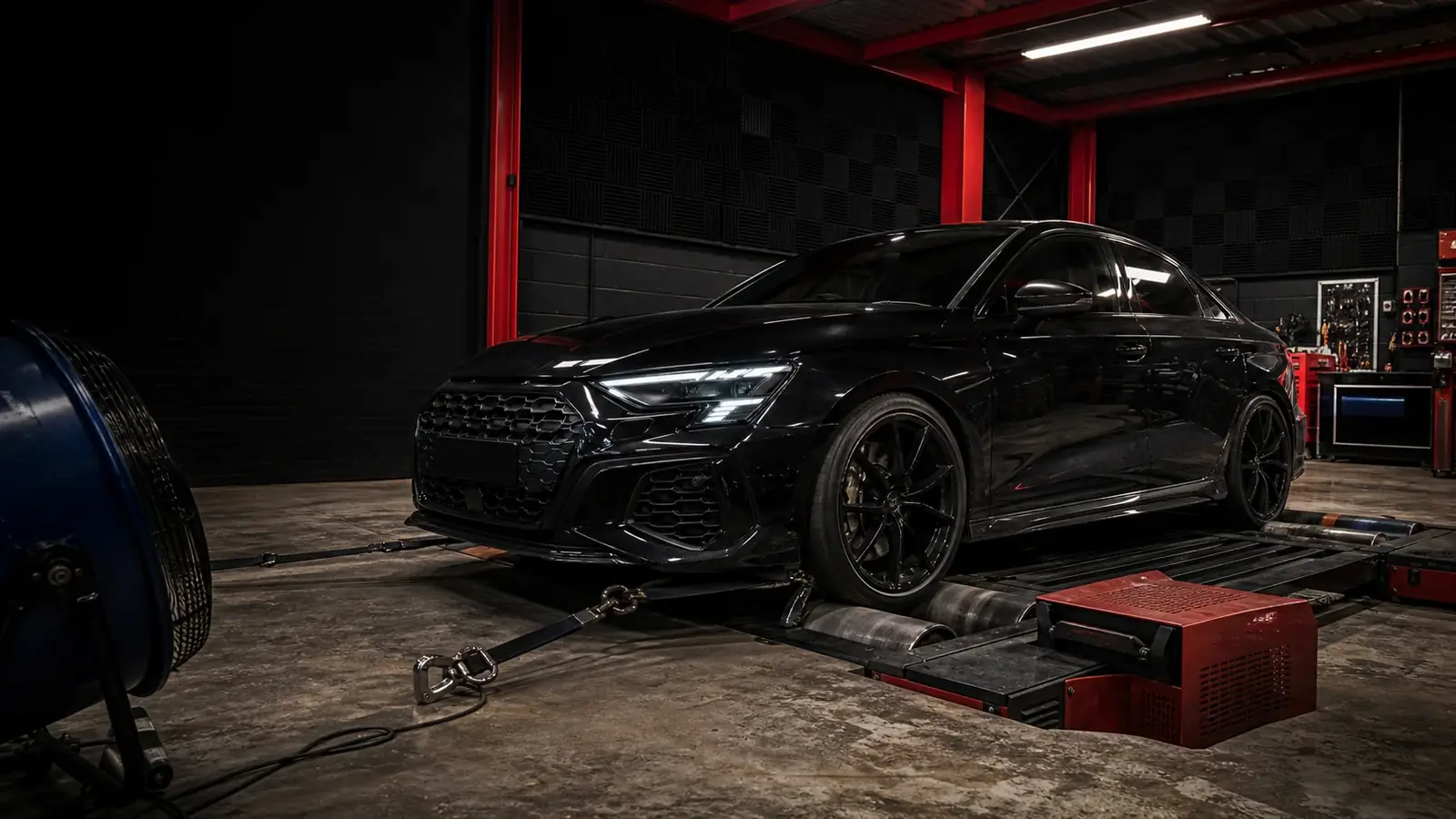
The Audi RS3 8V is built around the 2.5 TFSI five-cylinder, a high-output engine that can make serious power but is sensitive to heat, fuel quality and gearbox behaviour. It should be treated differently from the 2.0 TFSI S3 and Golf R platform.
Wraith Performance approaches RS3 tuning with checks around charge temperatures, fuelling headroom, DSG torque handling and how consistently the car repeats a pull. A fast RS3 should feel strong run after run, not just produce one attractive number.
Stock
Stage 1
Stage 2
Stage 3
Figures are guide data. Final results depend on vehicle health, fuel, hardware, gearbox and dyno conditions.
Stage 1 on an Audi RS3 is usually the best route for a standard road car, with guide figures around 460 bhp and 620 Nm. The focus is strong mid-range torque, sharper response and clean power delivery from the 2.5 TFSI without relying on hardware changes.
Health checks matter on this engine. Spark plugs, coil condition, fuel quality, intake temperatures and any stored ECU or gearbox faults should be reviewed before tuning, because the RS3 can quickly expose weak ignition or heat-related issues.
Stage 2 RS3 tuning is where hardware choice starts to matter. Guide figures around 510 bhp and 700 Nm need the right cooling, intake and legal exhaust hardware, plus checks that the fuel system and DSG calibration are ready for the requested torque.
A larger intercooler is often a sensible priority on the 2.5 TFSI because charge temperature control affects consistency. Wraith Performance can review what is already fitted and advise before software is written.
For Stage 3 or larger hardware routes, guide data shows this platform can move beyond 600+ bhp, but that should be treated as a build discussion with hardware, fuel, gearbox and cooling agreed first.
DSG tuning is commonly paired with RS3 ECU tuning because the gearbox has a major say in how torque reaches the road. Changes can support torque limits, shift behaviour, clutch control and launch or manual-mode response where supported.
On tuned RS3 setups, the aim is not simply faster shifts. The gearbox software should work with the engine calibration so the car does not close throttle, short-shift awkwardly or limit torque when the engine is capable of more.
Common RS3 supporting mods include an uprated intercooler, intake, road-compliant exhaust hardware, DSG tuning and fuel system checks. For higher stages, the hardware list should be agreed before chasing peak power.
The RS3 is often modified before it arrives, so Wraith Performance can check what is fitted, whether parts suit the requested stage and whether datalogging shows a stable base for tuning.
Dyno testing is valuable on the RS3 because the five-cylinder can show heat soak, torque intervention or fuelling limits under repeatable load. A before-and-after dyno route gives better evidence than judging the car from road feel alone.
Where supported, logs can review boost request, boost actual, ignition correction, intake temperatures, fuelling and DSG behaviour. That gives a clearer picture of whether the RS3 is making strong, repeatable power.
FAQs
Send the registration, engine, gearbox and current modifications. Wraith Performance will confirm the tuning route and appointment options.
Figures are examples. Actual results depend on vehicle health, fuel, temperature, hardware, gearbox and dyno conditions.
Yes. Always tell your insurer about ECU, gearbox and hardware modifications.
Contact
Send your vehicle details and preferred appointment time. The team will confirm suitability before any work is booked in.